


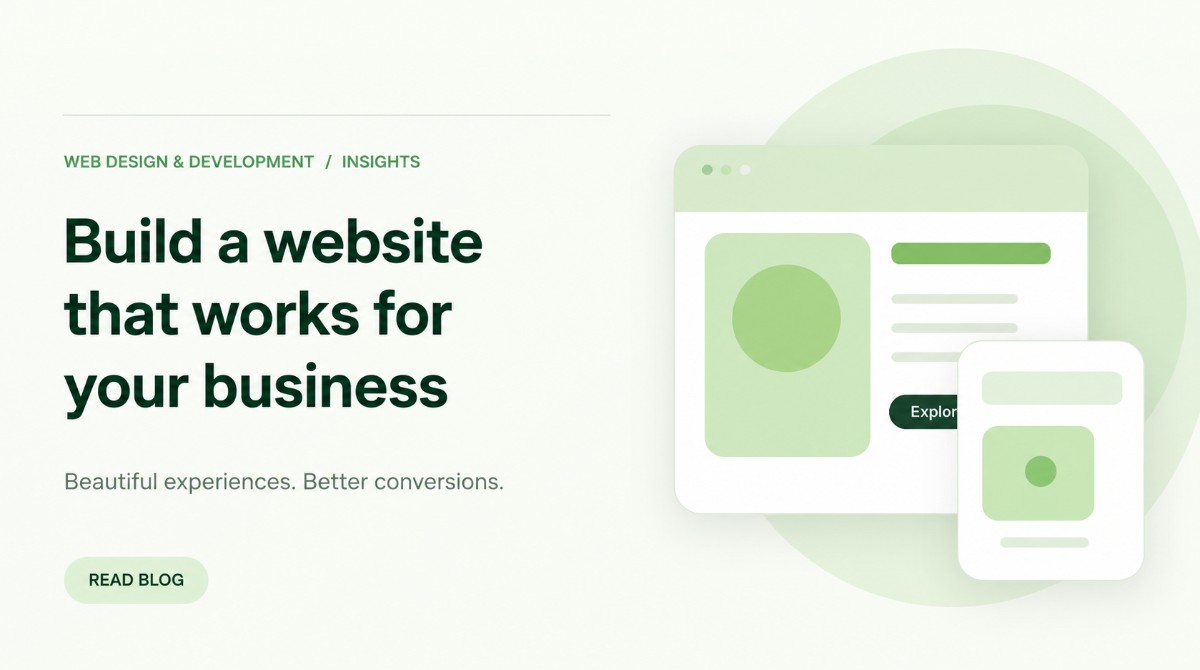
Your website may be the first serious conversation a customer has with your business. Within a few moments, visitors decide whether they understand your offer, trust the information and know what to do next. That is why business website design and development should be about more than a beautiful homepage.
A successful website combines clear content, useful design, dependable technology and a path toward a meaningful action. Here is how to plan one without getting lost in technical language.
Start with the purpose of the website
Before selecting colors or a platform, list the jobs your website needs to perform. A service company may want consultation requests. An ecommerce store needs product discovery and a practical checkout. A manufacturer may need to explain technical capabilities and support enquiries from several industries.
Choose a small set of important user actions, such as requesting a quote, booking a call or buying a product. Then think about the questions a visitor needs answered before taking that action. Your page structure should follow those questions rather than internal company departments alone.
Build navigation around customer needs
Visitors should be able to tell where they are and where to go next. Keep main navigation clear and use service or product names people recognize. Group related content sensibly. A good homepage introduces the value of your business; individual service pages should provide the detail that helps someone compare options.
Use descriptive links instead of “click here” wherever possible. Add FAQs, pricing information when suitable, delivery details or contact options where customers will look for them. If someone must call merely to discover basic facts, the website may be creating unnecessary work for both sides.
Design for mobile visitors from the beginning
Responsive website design means content remains usable on phones, tablets and computers. It is not just shrinking a desktop layout. Buttons should be easy to tap, text should be readable without zooming and forms should work with a mobile keyboard.
Test real journeys: open a product, compare details, fill a form and complete checkout on a phone. Check whether key actions remain visible and whether menus behave predictably. Good accessibility also helps more people use the site. Use meaningful labels, logical headings, adequate contrast and alternative text for useful images.
Choose the right website platform
WordPress can suit businesses that want flexible content publishing and manageable service pages. WooCommerce can add ecommerce workflows where that combination fits the project. Shopify offers a hosted ecommerce platform for stores that value supported catalog and checkout functions. Custom development, including frameworks such as Laravel, may be suitable when a company needs specialized workflows or integrations.
There is no perfect platform for every business. Compare required features, editing needs, hosting costs, security responsibilities, staff skills and long-term maintenance. Avoid paying for advanced features you will not use, but leave practical space for growth.
Make loading speed and reliability part of design
Large images, excessive effects and unnecessary third-party scripts can slow down a page. Optimize media, use modern formats where practical and review the number of plugins or external services. Test the site's key templates instead of judging speed from the homepage alone.
Plan hosting, backups, SSL configuration, software updates and access permissions before launch. A secure, reliable site depends on ongoing maintenance, not a one-time checkbox. Set clear responsibilities for fixing issues, renewing services and recovering from a problem.
Give search engines clear content and structure
Search visibility starts with understandable pages. Write unique page titles, useful explanations and descriptive headings. Give important services their own relevant URLs and connect related pages with internal links. Create useful content for customer questions instead of filling pages with repeated keywords.
Technical elements matter too. Check whether important pages are indexable, redirects work and the mobile experience is strong. Add structured data only when it accurately describes eligible content. A website should work for people first while remaining easy for search engines to access.
Turn interest into useful action
A good call to action is specific. “Request a website consultation” tells someone more than “Submit.” Keep enquiry forms as short as practical and explain what happens after someone sends one. For ecommerce, make shipping, returns and payment information easy to find before checkout.
Connect analytics to genuine business goals. Track useful actions without collecting unnecessary personal data. Review form completion, page journeys and customer questions, then improve weak points. Website optimization should continue after launch because customer expectations and business needs change.
Frequently asked questions
Should a small business choose WordPress or Shopify?
WordPress is often useful for content-led business sites, while Shopify is designed around ecommerce. The right choice depends on your products, integrations, editing needs and total operating cost.
How often should a business website be updated?
Review content whenever details change and maintain software, backups and security regularly. Periodic checks of speed, broken links and mobile journeys also help prevent small issues from growing.
Build a website that supports the business
Effective websites bring content, design, functionality and ongoing support together. Explore Poppy Seed's Web Technology services to plan a site that is easier for customers to use and easier for your team to manage.